Saturday, November 24, 2018
Research Recruitment: Not as Easy as it Looks
Maybe they're shy? Maybe they've been hit too many times by companies promising 'research' but actually pushing a pyramid scheme or an expensive sign-up? Maybe it's just the local area -perhaps Nigella Lawson is just a bit too 'out there' for Lithgovians?
The musings of a researcher trying to recruit Focus Group participants.
Either way, With data-collection beginning on Thursday, I only have 1/3 of my places filled for a free meal, a focus group chat, and a sweet treat to take home. This is slightly problematic. You see, especially with qualitative research, a significant study sample is pretty necessary. It's not that the opinions of the 25 people I have aren't valuable and insightful -they will be, but the analysed results will not be broadly (or even narrowly) applicable to the study-population. This means that (a) The results will have some problems passing peer-review, and (b) the questions I am asking (that I believe are extremely pertinent to health, nutrition and science communication) will be lost in the shifting sands of knowledge.
By the way, it's not just me asking these questions. When we (scientists) choose a topic for study, we do a fairly soul-destroying thing called a 'Literature review'. For those that have lived their lives without doing one: (a) lucky you!, (b) this innocently-named gauntlet means you read thousands of published papers in your field. You follow everything that is currently known, every spin-off study, every 'further research' suggestion. You hop across disciplines like an insane frog. You find 'gaps' in Nutrition, Sociology, Neuropsychiatry, media studies, biochemistry, physiology, microbiology, genetics, epigenetics, Psychology, Art, Literature studies, and many many more. Like a studious arachnid, you gather threads and follow them. You weave a story from the silks of all the others -rejecting some, connecting others. Eventually (after your brain leaks out your ears...again), you settle on a question that needs an answer. You are also now (apparently) some kind of amphibian/arachnid hybrid...but anyway, anyway...
That's just the beginning.
Your question may be quite good. In fact, it may be very good. However, you don't get to decide this. Instead, you will approach numerous professors in trembling anticipation with your little question. You'll hand it over in absolute terror, because it is they that will decide whether your question is one that the world/the university supports. It's not awfully different even outside the post-graduate realms. Your question, your thoughts, your enquiry will always be judged as meritorious or not -by funding bodies, by your employer, or by Industry requirements.
So, I did that...and they approved! Yes, I had a few glasses of bubbly that evening :-)
Then, there's another wee gauntlet...ETHICS. You see, unfortunately -Nutrition studies often involve humans. Well, they do for me. I just can't bring myself to decapitate/eviscerate mice on a regular basis in vague hopes that the murine model suddenly becomes applicable to humans...even for a sensational headline. Humans are complicated. In order to study them, you have to assure people (the ethics committee) that you aren't going to do anything to upset them, hurt them, cause lasting (or momentary) psychological damage, or y'know -accidentally kill them. So you devise yet another document and research methodology that ensures absolutely that your research will be as pleasant to participants as a relaxing stroll on a perfect beach in Ibiza (without the obvious hazards of possible drowning/sharp bits in sand/sun-damage/flying sharks/sand-flies/tsunamis/wind-storms...you get the idea). Look, I'm being flippant, but one doesn't have to go too far back into Scientific history to see why this is a pretty important step...Tuskagee Syphilis trials anyone?
Anyway anyway, -the ethics committee (miraculously) approves. It turns out that serving people dinner and talking to them is an acceptable risk. Thank goodness. I had been worried about the evening dinner with my family for decades...
You are elated. You set about doing your research. You print posters, saturate social media, initiate GoFundMe campaigns so you can afford to feed 60 people, rally local sponsorship deals, wangle venues. It's all very industrious and energetic. Then, on a quiet sunday of 'the week' it all begins, you check your booking sheets. Big gaps. BIG BIG BIGGITY BIG gaps. The trouble is, we're out of money and out of time now. It's literally in the 'hands of the gods'.
So, if I'm just a little 'twitchy' for the next 3 weeks you'll understand why. All that work, all that energy...and it's entirely possible that the story will just unravel and float away regardless.
Tuesday, November 20, 2018
Community gardeners: Passionate? Delusional? Both?
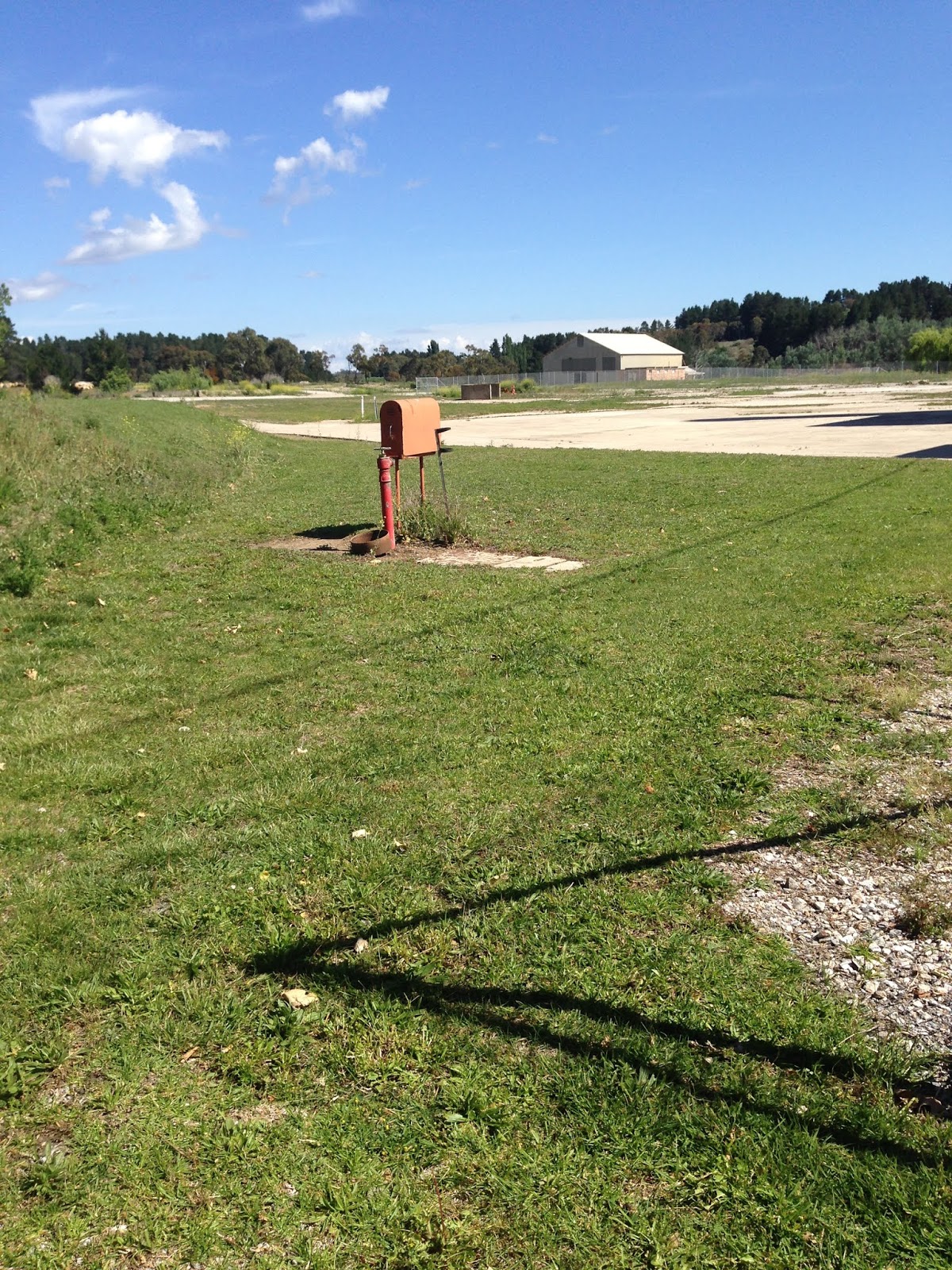
Today we started a community garden on a neglected 'brownfields'
site. The Portland Cement Works literally built Sydney. Once, this was a
thriving industrial community. Sure, it was constantly blanketed in a cloud of
cement-dust, and subsequent generations are still showing up to hospital with
respiratory diseases that smash state averages to smithereens, but hey -this is
a familiar story in many regional industrial centres. Coal mining, electrical
power-plants, cement works...no one bothers about it too much. There's a pride
in industry and survival. Not any great wonder that this is a set-in-stone
Nationals seat.
However, things are inching
towards change. As Sydney and the Greater West become increasingly impossible
to afford, the population is shifting -socially, economically and even
politically. Most encouraging of all, dying communities that have been left
adrift after industry closure are still fighting towards growth. This isn't
idealism, it's survival. The suicide rate in Lithgow is obscene. Hopelessness
is constantly tempered by social movements like "It's not weak to
speak", and "Walk and talk". People are trying to connect, to
solve, to grow.
I don't even pretend to have
comprehensive answers here. I'm a Nutrition scientist, a foodie and a gardener.
My part in helping is to use my knowledge to make a difference, any difference.
So, we're starting to breathe
life into a skeletal monolith of industry-past. I know of no better way than
planting a garden.
A garden IS life. It's building
soil back to fertility, it's planting and saving seeds in hope of a better
future. It's beauty, work, science, inspiration, joy and community. A depressed
patch of earth is as wonderful as a foster-child, or a large charitable
donation to me. It's crying out for nurture -something so many of us can
understand.
This is our little plot. 185 sq metres or so. The soil is...not. It's dust. It grows couch and hardy weeds, and is thickly matted. trust me, I tried to sink a mattock into it today and it said "Sod off!" in no uncertain terms. This is land that has been used until it's bleeding, and it's not coming back to softness without a fight.
This is my version of showing Cinderella her dress for the ball. Right now she's scoffing heartily. 'Not wearing that..NO WAY!'. She's pretty steely in her resolve. So, we're trying a gentler approach: 'It's too much. I get it...but maybe just these ear-rings?'. She harrumphs. Not pleased.
We adorn her anyway. We hope she'll get used to them...even like them eventually. This weekend, we'll try even more beautiful ones -made of hardwood sleepers and the richest soil. Perhaps with heirloom pumpkins sprawling over her parched body gently she'll give a little...just a little. Perhaps with regular water she'll yield...just a bit.
We're only here to help, but like all wounded things -the land is likely to give us a few swipes and scars before she trusts us enough. It's a gentle team of gardeners. No -one's going to attack her with gouging machines, or demand that she 'put out' before she's ready. We'll wait, and tickle. We're hoping that one day she remembers how wonderful it once was to be soft and fertile. We're hoping she'll forgive us for past wrongs.
In our tiny corner of a vast, wounded body, we're hoping to show her (and us as a community) that we can heal and thrive. Small steps.
Sunday, October 21, 2018
It's not Halloween, it's bloody Beltane.
Every October I have a spike in blood pressure. No, it's not diet-related -it's frustration that verges on fury. Every shopping centre from here to bloody Timbuktu is groaning under the weight of gaudy, plastic Halloween 'decorations'. Plastic, plastic everywhere. Plastic spiders, bats, skeletons, cobwebs, pumpkins. Apparently that little Attenborough documentary has been momentarily 'set aside' while we focus on the celebrations of the season.
Except it isn't the season.
I don't know if you've noticed Australia, but it's not autumn. It's gorgeous, thrumming, blooming, emerald SPRING. If you absolutely must have a seasonal quasi-Pagan celebration, the one you're looking for is Beltane/Ostara. Yes, it sounds like 'Easter' because it is. It's new chicks and bunnies, eggs and honey, spring greens, roaring bonfires and come-hither looks from people whose blood is thumping along with the energy of the season. It's a celebration of new life after the deep, cold dark of winter. It is lightness, sunshine, energy, fertility, sexuality. You know what it's not? Witches, ghouls, spiders, bats, creeping fog, jack-o-lanterns and the rest of the palaver.
It's normal for humans to want to celebrate seasonally. Hell, you can still wear silly costumes and have a jolly old get-together anyway.
So why does it bug me so damned much? The first reason is deeply felt -it's indicative of a much broader problem: Human disconnection from nature/the planet/the seasons. What on earth drives us antipodeans to have to pretend it's autumn? Is it some kind of global solidarity thing with our fellow bipeds in the North? I'd like to imagine it's that noble, but like Valentine's Day and every other once-sacred festival -it's more about profit than anything else.
Lithgow NSW is becoming quite well-known for its annual Halloween street-fair thingummy. On a warm, scented spring evening every year, the town is over-run with gaudy decorations, people dressing like dead things, and others spending $4/kg for a 20kg pumpkin to turn into a jack-o-lantern. Dude, that's one pricey damned pumpkin. It's also imported. Fossil fuel use anyone? Carbon footprint? Global climate crisis? Every damned expert in a 10-mile radius screaming that eating locally and seasonally is no longer a patchouli-loving hippie 'lifestyle choice', but a necessity? But no, -go ahead, spend what little money you have on the bloody pumpkin. Nice one Coles. No actual fog? That's OK, we'll set up multitudinous smoke-machines and belch forth a chemical version for your delectation. While we're at it, let's bob for 6 month old cold-storage apples that are practically mummified. Excellent.
"But it brings in the tourists!" scream the local council to anyone who'll listen. Yes, it does. Any big, spectacular public street fair would. Humans love dressing up and milling around with other humans. It's a thing. I suppose it's silly to suggest that we could use the resources of the season that are locally available to promote a celebration of the actual season? A promotion of local food producers? A promotion of the gorgeous spring wildflowers and walks in The gardens of Stone National park? Open gardens? Maypoles and bonfires? -You could sell just as much plastic junk I'm sure, if that's what's worrying you. I just don't get why we're hell-bent on celebrating the 'dying of the year' precisely when it's at its most vibrant and alive.
So, how do I bring down my indignant blood pressure at this time of year? -Culinary protest. I devour Spring with obscene enjoyment. Instead of 'trick or treating' for rubbish confectionary, I make honey-cakes and mead. I enjoy the lightness and powerful nutrition of the Spring garden. I try not to explode in a million furious shards when I go to a shopping-centre (that doesn't always work so well...). If you're of like-mind, -and I assume there must be at least one other Australian that agrees, try this salad -or your own version. Sit in the gloriously gentle Spring sunshine under a blossom tree. Listen to the hum of fertility as our little stripy-bummed friends ensure a bumper harvest.
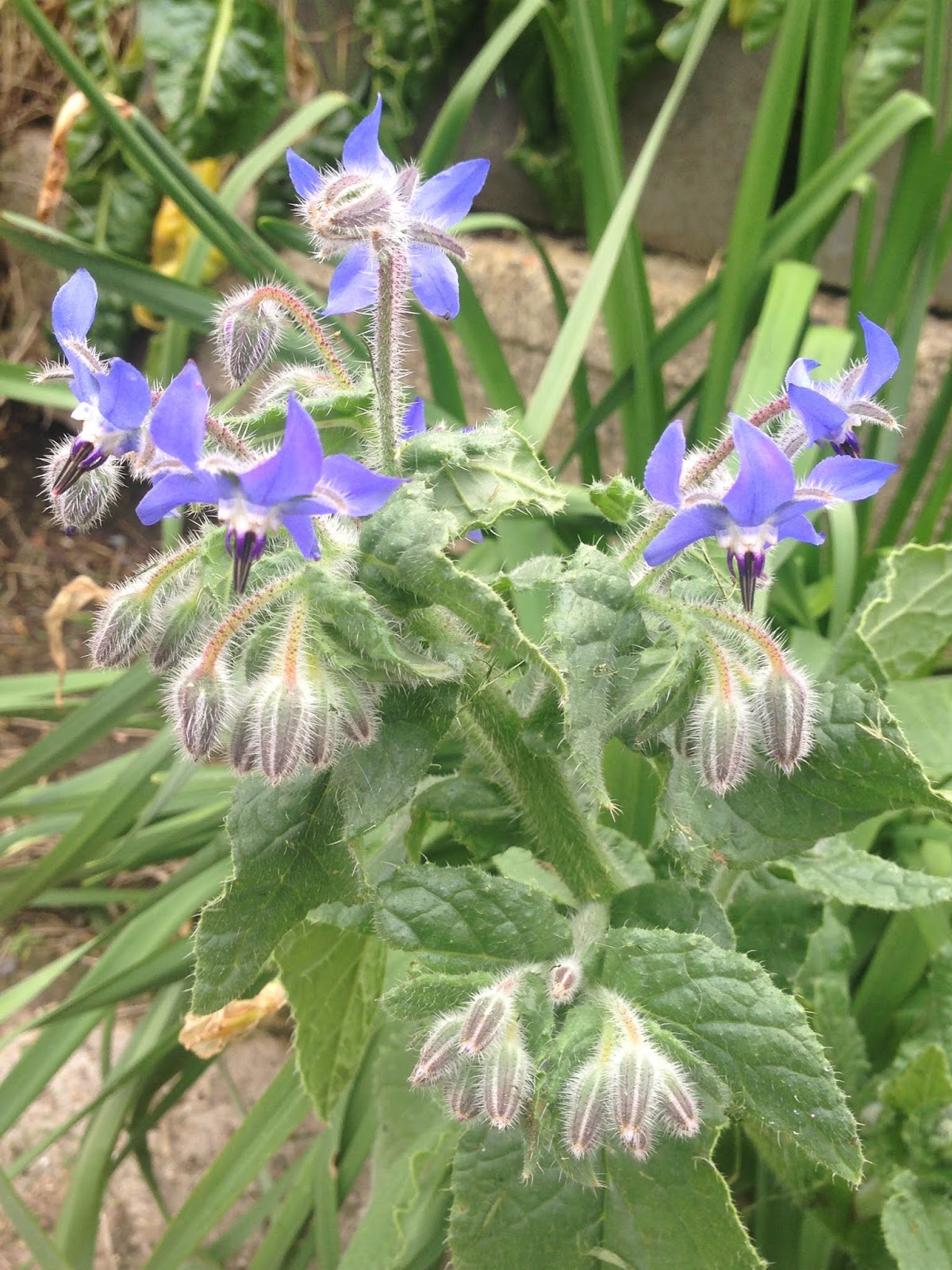
INGREDIENTS: Buttercrunch, flame and blonde du cazard lettuce; young dandelion greens, shredded baby kale, seared asparagus, egyptian purple snow peas, sauteed ruby chard stems in butter, chipotle and black pepper, fetta, borage flowers, kale flowers, toasted sunflower seeds, pea tendrils, cucumber, olive oil, lemon juice, garlic.
It tastes like Spring. It's light and crunchy and green and leaves you with plenty of energy for leaping over bonfires and such :-). It's also a super-multi-expialadocious powerhouse of nutrition!
Don't read this list carefully, the gist will do! Vitamin E, copper, B1, Manganese, selenium, phosphorous, magnesium. B6, folate, Niacin, linolenic acid, Vitamin C, Vitamin A, iron, Vitamin K, Calcium, protein, B12, Thiamin, riboflavin, anthocyanins, soluble and insoluble fibre.
'Try for 5'? I see your 5 and raise you. Go and paint yourself like a dead thing. I'm going to entertain myself in a seasonally appropriate manner....
Except it isn't the season.
I don't know if you've noticed Australia, but it's not autumn. It's gorgeous, thrumming, blooming, emerald SPRING. If you absolutely must have a seasonal quasi-Pagan celebration, the one you're looking for is Beltane/Ostara. Yes, it sounds like 'Easter' because it is. It's new chicks and bunnies, eggs and honey, spring greens, roaring bonfires and come-hither looks from people whose blood is thumping along with the energy of the season. It's a celebration of new life after the deep, cold dark of winter. It is lightness, sunshine, energy, fertility, sexuality. You know what it's not? Witches, ghouls, spiders, bats, creeping fog, jack-o-lanterns and the rest of the palaver.
It's normal for humans to want to celebrate seasonally. Hell, you can still wear silly costumes and have a jolly old get-together anyway.
So why does it bug me so damned much? The first reason is deeply felt -it's indicative of a much broader problem: Human disconnection from nature/the planet/the seasons. What on earth drives us antipodeans to have to pretend it's autumn? Is it some kind of global solidarity thing with our fellow bipeds in the North? I'd like to imagine it's that noble, but like Valentine's Day and every other once-sacred festival -it's more about profit than anything else.
Lithgow NSW is becoming quite well-known for its annual Halloween street-fair thingummy. On a warm, scented spring evening every year, the town is over-run with gaudy decorations, people dressing like dead things, and others spending $4/kg for a 20kg pumpkin to turn into a jack-o-lantern. Dude, that's one pricey damned pumpkin. It's also imported. Fossil fuel use anyone? Carbon footprint? Global climate crisis? Every damned expert in a 10-mile radius screaming that eating locally and seasonally is no longer a patchouli-loving hippie 'lifestyle choice', but a necessity? But no, -go ahead, spend what little money you have on the bloody pumpkin. Nice one Coles. No actual fog? That's OK, we'll set up multitudinous smoke-machines and belch forth a chemical version for your delectation. While we're at it, let's bob for 6 month old cold-storage apples that are practically mummified. Excellent.
"But it brings in the tourists!" scream the local council to anyone who'll listen. Yes, it does. Any big, spectacular public street fair would. Humans love dressing up and milling around with other humans. It's a thing. I suppose it's silly to suggest that we could use the resources of the season that are locally available to promote a celebration of the actual season? A promotion of local food producers? A promotion of the gorgeous spring wildflowers and walks in The gardens of Stone National park? Open gardens? Maypoles and bonfires? -You could sell just as much plastic junk I'm sure, if that's what's worrying you. I just don't get why we're hell-bent on celebrating the 'dying of the year' precisely when it's at its most vibrant and alive.
So, how do I bring down my indignant blood pressure at this time of year? -Culinary protest. I devour Spring with obscene enjoyment. Instead of 'trick or treating' for rubbish confectionary, I make honey-cakes and mead. I enjoy the lightness and powerful nutrition of the Spring garden. I try not to explode in a million furious shards when I go to a shopping-centre (that doesn't always work so well...). If you're of like-mind, -and I assume there must be at least one other Australian that agrees, try this salad -or your own version. Sit in the gloriously gentle Spring sunshine under a blossom tree. Listen to the hum of fertility as our little stripy-bummed friends ensure a bumper harvest.
INGREDIENTS: Buttercrunch, flame and blonde du cazard lettuce; young dandelion greens, shredded baby kale, seared asparagus, egyptian purple snow peas, sauteed ruby chard stems in butter, chipotle and black pepper, fetta, borage flowers, kale flowers, toasted sunflower seeds, pea tendrils, cucumber, olive oil, lemon juice, garlic.
It tastes like Spring. It's light and crunchy and green and leaves you with plenty of energy for leaping over bonfires and such :-). It's also a super-multi-expialadocious powerhouse of nutrition!
Don't read this list carefully, the gist will do! Vitamin E, copper, B1, Manganese, selenium, phosphorous, magnesium. B6, folate, Niacin, linolenic acid, Vitamin C, Vitamin A, iron, Vitamin K, Calcium, protein, B12, Thiamin, riboflavin, anthocyanins, soluble and insoluble fibre.
'Try for 5'? I see your 5 and raise you. Go and paint yourself like a dead thing. I'm going to entertain myself in a seasonally appropriate manner....
Friday, October 19, 2018
A stroll, a chat, and standing in the rain.
'Weather's a'comin' ' says the Bureau of Meteorology. Big weather. That's why I thought you might enjoy a stroll/muse/chat this morning. This afternoon will probably be devoted to baking while fat tears fall from leaden skies.
So, we'll head out the back door and take a look around if you like? Oh, yes. The Lemon Balm thriving in a crack in the concrete? I don't know why it does so well there, but I just can't remove it for the sake of 'neatness'. In the evening, it wafts the most deliciously green citrus scent. My son sees it as a herbal pillow/bed too. It doesn't even seem to mind being lain upon.
Lavender amongst the cat-mint. I actually don't know why cat-mint got its name -neither of my felines have shown the slightest interest in the plant. However, it's green, beautiful, luscious, and puts on quite an autumnal display. It stays. When it flowers it's also the Honey-bee Grand Hyatt, so it's valuable to me. Hell, anything thriving and beautiful ends up being valuable to me.
It's appropriate though, this is where we buried my beloved Nimue. A tuxedo cat with a serious attitude. The silly girl decided to take on a snake a couple of years ago. But that was her, -fearless, protective, and absolutely certain she was a Lion.
It's less of an 'apple tree' and more of an 'apple twig' I know, but this is the prized Cox's Orange Pippin. We call her 'Pip' (the walnut seedling, naturally enough, is 'Wally'). By my reckoning, I may taste an apple from this twiglet before I'm 50. Have you heard of it? It's a bit of a crazy-apple-person thing, and to hear tell, they don't store or transport particularly well (hence not being a successful commercial variety). The story goes though (and I choose to believe it), that a pippin munched straight from the tree is the perfect blend of acidity, crunch and sweetness. An apple to transport you to Avalon via your olfactory receptors. Gardeners are a funny lot aren't we? We'll wait years for the pleasure of a particular varietal. It doesn't occur to us to mind.
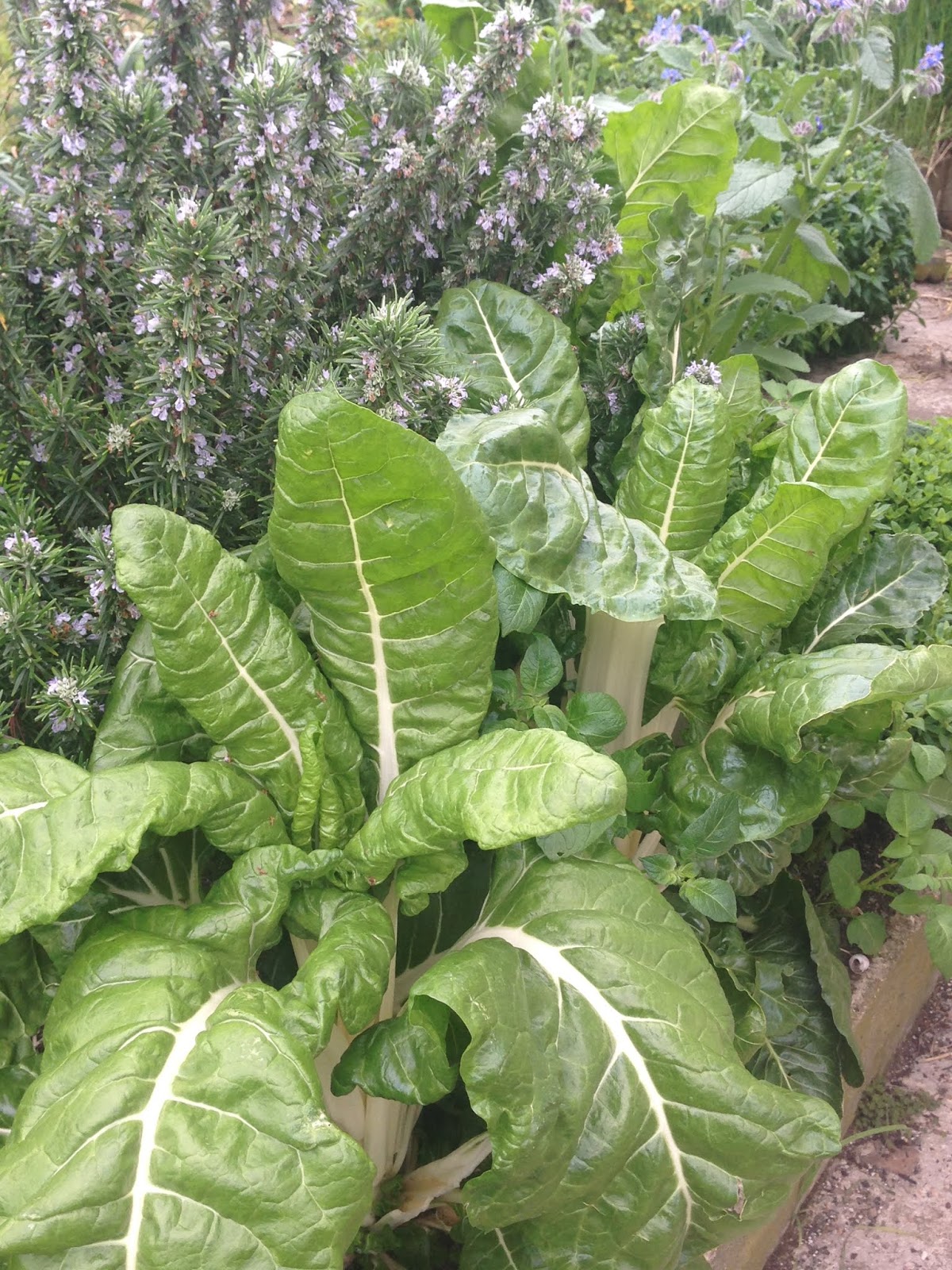
Ruby chard, silverbeet and dandelions. The vibrant colours here make my heart happy. The crimson stems are indulgent...almost bloody. A scarlet flash in a sea of thousands of shades of green. If you've read anything about nutrition lately -you'll probably know that vibrantly coloured foods (particularly purples/blues/reds) are nutrient powerhouses too. I won't bore you with the science :-). These stems make a really surprising little side-dish too. Just slice them into thick julienne strips and saute in butter, orange juice, black pepper and a sprinkle of chilli. Yes, we might do that for lunch if you like. Did you bring the basket? -Good. Grab a few stems then.
No, I don't dig out my dandelions! (a) bees love them, (b) nothing cheerier on a grey day, (c) leaves are great in salad or mixed up with spinach and mallow and cheeses and lovingly wrapped in puff pastry.

Ah, you've found my three princesses! My beloved blueberries. These lasses are spoiled beyond belief. Re-potted every year with azalea/rhododendron mix, mulched with pine needles and fed seaweed solution, blood & bone, and coffee grounds. In about a month I will gobble handfuls of sweet, indigo berries. They never make it inside. They are an evening garden nibble in the gloaming. Pollination is quite deliberate here. As you can see, the massive rosemary, the blueberries, the lavender and the Pink Lady apple are planted quite snugly. This means I get a LOT of frantic bees every spring that just lurch drunkenly from one set of blossoms to the other. It's a bee's version of a pub-crawl, and I get a large harvest as a result.
OK, mind your step. The 'path' from the back garden to the front was laid by someone with excellent intentions and absolutely no skill I'm afraid. Oh, that bed just to your right is new and full of sapphire potatoes. So, here among the enormous brassicas is another of my delights -The Egyptian purple peas. The peas themselves won't be purple, just the pods and the flowers, but there was something so gorgeous about lime-green peas nestled in a deep purple pod in the catalogue...I couldn't resist. Also, being frank -the older I get, the more my eyes appreciate contrast when harvesting. It's the same reason I'm planting yellow zucchini this year instead of green :-). Actually, truth be told, I'm perfectly happy just with the flower display. Oh, and twirly twiny pea-tendrils are a great addition to a salad, or as a fancy garnish. Apparently chefs pay top dollar for them. Meh...I paid $4.00 for a packet of seeds, and I'll have free tendrils all spring.
My Savoy Cabbage giants! I planted these during the drought and had all but given up on them. However, during the first decent rain I peered among the waist-high grass that was taking over the bed -and there they were, thriving away in the wilderness. We cleared the competition, fed and mulched and then more delicious rain! They're right next to the peas too, so they're getting plenty of nitrogen from the pea's root-nodules, the rain, and of course -judicious application of blood and bone. I probably should ferment more and actually preserve a lot of this, but I can quite merrily eat a bowlful of shredded leaves just cooked in butter, garlic, black pepper, and savoury yeast flakes. In fact, it's on the menu a number of times this week. When it's straight from the garden (no storage), you get a lot less of the obvious sulfurous compounds in flavour too...just a lot of delightful crunchy sweetness.
Yes, I have let the curly kale go to flower. Again, bees think it's ambrosia, and I get to collect seed for next autumn/winter's planting. See, these guys have been busily adapting their traits for precisely the conditions in my garden, so it makes sense to use that strength/adaptability and allow it to become even stronger with each passing season. In particular, they survived pretty dire drought conditions so these guys have a valuable genetic trait that it's wise to hold on to...particularly if you read IPCC reports regarding what's likely to happen to food supplies in the near future. I most often use kale as a 'slaw' with finely sliced granny smith, grated golden beets, spring onions, walnuts and homemade mayo...although it's also a revelation deep-fried and served alongside poached eggs, sourdough and char-grilled tomatoes.
I love this! I didn't plant them -they're volunteers from last season's crop of buttercrunch lettuce :-). They're a little smaller this time, but somehow 'meatier'. I've been eating these every night in a simple spring salad with new peas, asparagus and a light french dressing. It tastes exactly as you would imagine 'Spring' might taste. Around the edges you'll see more seedlings everywhere -that's red round turnips, sweet peas, georgia collards, dark galaxy carrots, and a couple of volunteer cornflowers. It's a little chaotic I'dd admit -but they all seem to get along fine. As one dies down, the others take over etc. I also get very little (if any) insect damage as a result of my 'random planting' -I think the bugs are confused. Go ahead, you can laugh at me -people often do. I don't mind. Laughter is joyous and that's precisely what gardens should make you feel. I'm also not at all offended -my system works for me, and really -does anything else, or anyone else's opinion matter?
MORE lavender. Well, one should always plant lavender for 'luck' right? I do occasionally use it in cooking (especially with sapphire potatoes), but mostly it gets festooned in my bedroom or tied into a muslin bag under a bath tap. It also just gets fondled quite a bit. You know, when you wander about, run your hand firmly up the stalk and just inhale the fragrance married to your own skin? It's another gardener-thing I think. It's a comfortingly spicy smell isn't it? In fact, when you cook with it, it really is better to treat it more as a spice than a herb. This is one punchy little plant when it comes to volatile oils, and a little goes a long way. It also lifts a dish from the 'yep' to the 'wow' though. Yes, if you come back in summer I will cook you my lavender sapphire spuds.
I'm not sure how the maths works with sunflowers, but if you plant 20 seeds, 40 seem to germinate...and in many places where you didn't plant them. These are the ones with the copper centres, very spectacular in midsummer. I admit -I'm not exactly worried about a garden heaving with the pure optimism and gaudy show-off-ness of too many sunflowers. The native birds don't mind much either. Autumn is a parrot jubilee around here as every brightly feathered thing within 10 miles stocks up on the incredible nutrition in the seeds. I haven't yet harvested sunflower seeds for culinary purposes, but I think I will this year. Hopefully there's a nice easy-ish de-hulling process somewhere, because although passionate about such things, there is a limit to one's dedication :-). However, they're an excellent source of protein, Iron, Vitamin E and Zinc, so I suppose one should make an effort...perhaps we could sit on the porch hulling seeds in aprons with some creepy in-law playing unnerving banjo tunes in the background?
PLEASE take some of this home with you! Because of some dude called 'Murphy' and his damned law, my most spectacular produce is usually the stuff I don't eat all that often. Don't get me wrong, I quite like silverbeet, but I think I've been dulled to it by over-exposure over the years. Until recently (and around here -still...) every vegetarian offering on every menu was 'spinach-and-cheese-something'. Apparently there was no other vegetable combo available, or every vegetarian was drawn to it like crack. I have no idea. Actually, there's an awesome salad I make called 'Naked children in the grass' that involves shredded spinach, butterbeans, tomato, red onions, pecans and a gorgeous dressing that's worth trying next time you're here. There's a lot of palaver about uncooked spinach and its oxalates binding calcium, but even as someone who has developed multiple gallbladder stones in the past, I refuse to be perturbed.
Ah yes, they're snapdragons -just starting to think about flowering. I adore them. It's a childhood hangover. I loved squeezing the flowers and seeing the dragons jaws snapping! They're also entirely unpredictable in colour variation. Apparently, in the language of flowers, they symbolise 'a gracious lady', or 'deception'...well, maintaining the appearance of graciousness is going to require some deception now isn't it? It's rather like when you tell me a terrible joke and I smile and laugh, while internally wishing you would explode...sorta :-). Either way, they're very 'cottage garden', and have a delightful bushy-droopy habit that makes them lovely on raised garden edgings. And of course, it is delightful to see a stripy little bee bum poking out of the dragon's throat.
I know this sounds odd, but let's just lie down here in the grass for a second. I like to keep a few meadow/wild areas around. Here's where you can see beauty in wildness if you care to look. Just in that little section in front of you is an incredibly diverse species system, all telling you a story about the soil and conditions. There's Germander Speedwell (the little pink flowers), Doves Foot Cranebill (little blue flowers), white clover, dandelion, Narrow leaf plantain, mallow, scarlet pimpernel, and flanders poppies. Sure, they're 'weeds', but can you see the loveliness? Each one is thriving, but they're all doing something too -ensuring a balanced soil system. Some are busy mitigating acids, some are sending down deep tap-roots, some are developing intimate relationships with particular soil microbia. I think of it like gut microflora -it's varied and balanced. It's only when you get one species taking over that you have a problem. To be honest, a monoculture lawn of perfection always makes me a little nervous.
Oh. You rolled over and came face-to-face with what appears to be lettuce in the lawn? It is lettuce. Apparently the Blond du cazard heirloom lettuce from last season met the wind and they went on a bit of an adventure. Who's complaining? (apart from whomever has to mow my lawn..often me.). It's small to be sure, but it's yet another harvest for my salads with no effort on my behalf. Again, it's adjusting itself beautifully to my garden conditions and developing hardier characteristics. No hot-house beauty this one -this is a wildling creature that survives against the odds.
The volunteer pears are doing their thing again. Hundreds of dusky nublets developing into gloriously speckled, fat-bottomed fruits. Their flowers were beloved by the bees, and unfortunately -their fruit is beloved by the European Wasp in summer. This year I will judiciously harvest and store to break down the stone-cells and make something delicious...I promise. What? Is that skepticism I see settling on your face like a particularly odious wrinkle? OK...this year I'll try to do something useful with them. In the meantime, their glossy leaves, gracefully weeping boughs and fruits make me smile just because. I like beauty. I love abundance. If nothing else, they provide my chooks with great shade in the hotter months, and windfall fruit (and attendant grubs) are a delicious protein-snack for the feathered denizens of the 'Egg-plant'. That's reason enough. Oh, -you've seen the fairy wrens! They too seem to love the pear tree.
Of course, no garden tour would be complete without my faithful shadow trying to trip you up every two seconds. Apparently, humans in gardens are her very favourite game. You should try weeding...she will pounce on your hands every 2 minutes. Of course, as far as she's concerned, it's her garden. We are intruders. It's a shame it's so early in the day. It's worth seeing her leaping into the air like a slightly mental thing chasing moths of an evening. It's well worth just sitting with a cup of tea and watching the apparently fruitless acrobatic display :). My animals give me many reasons to smile. Mad Mellie the 'Houdini chook', Rosie the feminine and polite, Lettie the village idiot...they're all a part of my slightly chaotic little family.
Anyway, let's leave the fur-kids to their shady nook and the tasty snacks to be uncovered therein and go and make a cuppa. I'm sure I can manage a batch of lemonade scones if you're interested -then you could try my blackberry jam as well :-). Let's not be too profound. How about we just sit and muse on our perfect garden? Tell me about yours? Ah, here comes the promised rain. No need to run indoors, let's just stand here for a moment and get wet. It's only water :-). See? you look joyful in the rain, and somehow softer. Raindrops are just as charming on human eyelashes as they are on rose-petals. Just for a moment, we're more vulnerable, more child-like, and less guarded. It's as though these simple cloud-tears have somehow stripped away all our masks and pretenses and left us just as we are. A couple of humans enjoying beauty and 'a little chaos'. OK Soggy, let's go in and get you that cuppa.
So, we'll head out the back door and take a look around if you like? Oh, yes. The Lemon Balm thriving in a crack in the concrete? I don't know why it does so well there, but I just can't remove it for the sake of 'neatness'. In the evening, it wafts the most deliciously green citrus scent. My son sees it as a herbal pillow/bed too. It doesn't even seem to mind being lain upon.
Lavender amongst the cat-mint. I actually don't know why cat-mint got its name -neither of my felines have shown the slightest interest in the plant. However, it's green, beautiful, luscious, and puts on quite an autumnal display. It stays. When it flowers it's also the Honey-bee Grand Hyatt, so it's valuable to me. Hell, anything thriving and beautiful ends up being valuable to me.
It's appropriate though, this is where we buried my beloved Nimue. A tuxedo cat with a serious attitude. The silly girl decided to take on a snake a couple of years ago. But that was her, -fearless, protective, and absolutely certain she was a Lion.
It's less of an 'apple tree' and more of an 'apple twig' I know, but this is the prized Cox's Orange Pippin. We call her 'Pip' (the walnut seedling, naturally enough, is 'Wally'). By my reckoning, I may taste an apple from this twiglet before I'm 50. Have you heard of it? It's a bit of a crazy-apple-person thing, and to hear tell, they don't store or transport particularly well (hence not being a successful commercial variety). The story goes though (and I choose to believe it), that a pippin munched straight from the tree is the perfect blend of acidity, crunch and sweetness. An apple to transport you to Avalon via your olfactory receptors. Gardeners are a funny lot aren't we? We'll wait years for the pleasure of a particular varietal. It doesn't occur to us to mind.
Ruby chard, silverbeet and dandelions. The vibrant colours here make my heart happy. The crimson stems are indulgent...almost bloody. A scarlet flash in a sea of thousands of shades of green. If you've read anything about nutrition lately -you'll probably know that vibrantly coloured foods (particularly purples/blues/reds) are nutrient powerhouses too. I won't bore you with the science :-). These stems make a really surprising little side-dish too. Just slice them into thick julienne strips and saute in butter, orange juice, black pepper and a sprinkle of chilli. Yes, we might do that for lunch if you like. Did you bring the basket? -Good. Grab a few stems then.
No, I don't dig out my dandelions! (a) bees love them, (b) nothing cheerier on a grey day, (c) leaves are great in salad or mixed up with spinach and mallow and cheeses and lovingly wrapped in puff pastry.
Ah, you've found my three princesses! My beloved blueberries. These lasses are spoiled beyond belief. Re-potted every year with azalea/rhododendron mix, mulched with pine needles and fed seaweed solution, blood & bone, and coffee grounds. In about a month I will gobble handfuls of sweet, indigo berries. They never make it inside. They are an evening garden nibble in the gloaming. Pollination is quite deliberate here. As you can see, the massive rosemary, the blueberries, the lavender and the Pink Lady apple are planted quite snugly. This means I get a LOT of frantic bees every spring that just lurch drunkenly from one set of blossoms to the other. It's a bee's version of a pub-crawl, and I get a large harvest as a result.
OK, mind your step. The 'path' from the back garden to the front was laid by someone with excellent intentions and absolutely no skill I'm afraid. Oh, that bed just to your right is new and full of sapphire potatoes. So, here among the enormous brassicas is another of my delights -The Egyptian purple peas. The peas themselves won't be purple, just the pods and the flowers, but there was something so gorgeous about lime-green peas nestled in a deep purple pod in the catalogue...I couldn't resist. Also, being frank -the older I get, the more my eyes appreciate contrast when harvesting. It's the same reason I'm planting yellow zucchini this year instead of green :-). Actually, truth be told, I'm perfectly happy just with the flower display. Oh, and twirly twiny pea-tendrils are a great addition to a salad, or as a fancy garnish. Apparently chefs pay top dollar for them. Meh...I paid $4.00 for a packet of seeds, and I'll have free tendrils all spring.
My Savoy Cabbage giants! I planted these during the drought and had all but given up on them. However, during the first decent rain I peered among the waist-high grass that was taking over the bed -and there they were, thriving away in the wilderness. We cleared the competition, fed and mulched and then more delicious rain! They're right next to the peas too, so they're getting plenty of nitrogen from the pea's root-nodules, the rain, and of course -judicious application of blood and bone. I probably should ferment more and actually preserve a lot of this, but I can quite merrily eat a bowlful of shredded leaves just cooked in butter, garlic, black pepper, and savoury yeast flakes. In fact, it's on the menu a number of times this week. When it's straight from the garden (no storage), you get a lot less of the obvious sulfurous compounds in flavour too...just a lot of delightful crunchy sweetness.
Yes, I have let the curly kale go to flower. Again, bees think it's ambrosia, and I get to collect seed for next autumn/winter's planting. See, these guys have been busily adapting their traits for precisely the conditions in my garden, so it makes sense to use that strength/adaptability and allow it to become even stronger with each passing season. In particular, they survived pretty dire drought conditions so these guys have a valuable genetic trait that it's wise to hold on to...particularly if you read IPCC reports regarding what's likely to happen to food supplies in the near future. I most often use kale as a 'slaw' with finely sliced granny smith, grated golden beets, spring onions, walnuts and homemade mayo...although it's also a revelation deep-fried and served alongside poached eggs, sourdough and char-grilled tomatoes.
I love this! I didn't plant them -they're volunteers from last season's crop of buttercrunch lettuce :-). They're a little smaller this time, but somehow 'meatier'. I've been eating these every night in a simple spring salad with new peas, asparagus and a light french dressing. It tastes exactly as you would imagine 'Spring' might taste. Around the edges you'll see more seedlings everywhere -that's red round turnips, sweet peas, georgia collards, dark galaxy carrots, and a couple of volunteer cornflowers. It's a little chaotic I'dd admit -but they all seem to get along fine. As one dies down, the others take over etc. I also get very little (if any) insect damage as a result of my 'random planting' -I think the bugs are confused. Go ahead, you can laugh at me -people often do. I don't mind. Laughter is joyous and that's precisely what gardens should make you feel. I'm also not at all offended -my system works for me, and really -does anything else, or anyone else's opinion matter?
MORE lavender. Well, one should always plant lavender for 'luck' right? I do occasionally use it in cooking (especially with sapphire potatoes), but mostly it gets festooned in my bedroom or tied into a muslin bag under a bath tap. It also just gets fondled quite a bit. You know, when you wander about, run your hand firmly up the stalk and just inhale the fragrance married to your own skin? It's another gardener-thing I think. It's a comfortingly spicy smell isn't it? In fact, when you cook with it, it really is better to treat it more as a spice than a herb. This is one punchy little plant when it comes to volatile oils, and a little goes a long way. It also lifts a dish from the 'yep' to the 'wow' though. Yes, if you come back in summer I will cook you my lavender sapphire spuds.
I'm not sure how the maths works with sunflowers, but if you plant 20 seeds, 40 seem to germinate...and in many places where you didn't plant them. These are the ones with the copper centres, very spectacular in midsummer. I admit -I'm not exactly worried about a garden heaving with the pure optimism and gaudy show-off-ness of too many sunflowers. The native birds don't mind much either. Autumn is a parrot jubilee around here as every brightly feathered thing within 10 miles stocks up on the incredible nutrition in the seeds. I haven't yet harvested sunflower seeds for culinary purposes, but I think I will this year. Hopefully there's a nice easy-ish de-hulling process somewhere, because although passionate about such things, there is a limit to one's dedication :-). However, they're an excellent source of protein, Iron, Vitamin E and Zinc, so I suppose one should make an effort...perhaps we could sit on the porch hulling seeds in aprons with some creepy in-law playing unnerving banjo tunes in the background?
PLEASE take some of this home with you! Because of some dude called 'Murphy' and his damned law, my most spectacular produce is usually the stuff I don't eat all that often. Don't get me wrong, I quite like silverbeet, but I think I've been dulled to it by over-exposure over the years. Until recently (and around here -still...) every vegetarian offering on every menu was 'spinach-and-cheese-something'. Apparently there was no other vegetable combo available, or every vegetarian was drawn to it like crack. I have no idea. Actually, there's an awesome salad I make called 'Naked children in the grass' that involves shredded spinach, butterbeans, tomato, red onions, pecans and a gorgeous dressing that's worth trying next time you're here. There's a lot of palaver about uncooked spinach and its oxalates binding calcium, but even as someone who has developed multiple gallbladder stones in the past, I refuse to be perturbed.
Ah yes, they're snapdragons -just starting to think about flowering. I adore them. It's a childhood hangover. I loved squeezing the flowers and seeing the dragons jaws snapping! They're also entirely unpredictable in colour variation. Apparently, in the language of flowers, they symbolise 'a gracious lady', or 'deception'...well, maintaining the appearance of graciousness is going to require some deception now isn't it? It's rather like when you tell me a terrible joke and I smile and laugh, while internally wishing you would explode...sorta :-). Either way, they're very 'cottage garden', and have a delightful bushy-droopy habit that makes them lovely on raised garden edgings. And of course, it is delightful to see a stripy little bee bum poking out of the dragon's throat.
I know this sounds odd, but let's just lie down here in the grass for a second. I like to keep a few meadow/wild areas around. Here's where you can see beauty in wildness if you care to look. Just in that little section in front of you is an incredibly diverse species system, all telling you a story about the soil and conditions. There's Germander Speedwell (the little pink flowers), Doves Foot Cranebill (little blue flowers), white clover, dandelion, Narrow leaf plantain, mallow, scarlet pimpernel, and flanders poppies. Sure, they're 'weeds', but can you see the loveliness? Each one is thriving, but they're all doing something too -ensuring a balanced soil system. Some are busy mitigating acids, some are sending down deep tap-roots, some are developing intimate relationships with particular soil microbia. I think of it like gut microflora -it's varied and balanced. It's only when you get one species taking over that you have a problem. To be honest, a monoculture lawn of perfection always makes me a little nervous.
Oh. You rolled over and came face-to-face with what appears to be lettuce in the lawn? It is lettuce. Apparently the Blond du cazard heirloom lettuce from last season met the wind and they went on a bit of an adventure. Who's complaining? (apart from whomever has to mow my lawn..often me.). It's small to be sure, but it's yet another harvest for my salads with no effort on my behalf. Again, it's adjusting itself beautifully to my garden conditions and developing hardier characteristics. No hot-house beauty this one -this is a wildling creature that survives against the odds.
The volunteer pears are doing their thing again. Hundreds of dusky nublets developing into gloriously speckled, fat-bottomed fruits. Their flowers were beloved by the bees, and unfortunately -their fruit is beloved by the European Wasp in summer. This year I will judiciously harvest and store to break down the stone-cells and make something delicious...I promise. What? Is that skepticism I see settling on your face like a particularly odious wrinkle? OK...this year I'll try to do something useful with them. In the meantime, their glossy leaves, gracefully weeping boughs and fruits make me smile just because. I like beauty. I love abundance. If nothing else, they provide my chooks with great shade in the hotter months, and windfall fruit (and attendant grubs) are a delicious protein-snack for the feathered denizens of the 'Egg-plant'. That's reason enough. Oh, -you've seen the fairy wrens! They too seem to love the pear tree.
Of course, no garden tour would be complete without my faithful shadow trying to trip you up every two seconds. Apparently, humans in gardens are her very favourite game. You should try weeding...she will pounce on your hands every 2 minutes. Of course, as far as she's concerned, it's her garden. We are intruders. It's a shame it's so early in the day. It's worth seeing her leaping into the air like a slightly mental thing chasing moths of an evening. It's well worth just sitting with a cup of tea and watching the apparently fruitless acrobatic display :). My animals give me many reasons to smile. Mad Mellie the 'Houdini chook', Rosie the feminine and polite, Lettie the village idiot...they're all a part of my slightly chaotic little family.
Anyway, let's leave the fur-kids to their shady nook and the tasty snacks to be uncovered therein and go and make a cuppa. I'm sure I can manage a batch of lemonade scones if you're interested -then you could try my blackberry jam as well :-). Let's not be too profound. How about we just sit and muse on our perfect garden? Tell me about yours? Ah, here comes the promised rain. No need to run indoors, let's just stand here for a moment and get wet. It's only water :-). See? you look joyful in the rain, and somehow softer. Raindrops are just as charming on human eyelashes as they are on rose-petals. Just for a moment, we're more vulnerable, more child-like, and less guarded. It's as though these simple cloud-tears have somehow stripped away all our masks and pretenses and left us just as we are. A couple of humans enjoying beauty and 'a little chaos'. OK Soggy, let's go in and get you that cuppa.
Thursday, March 15, 2018
IF STREETS REMEMBER
If streets remember
When we pass this way
or that,
Do the streets
remember?
If we walk the same
stretch
your long strides
outpacing mine,
Will cold grey slabs
hold an imprint?
Will that gust of
breeze take just a little of you
or me
And hold it there like
a treasure
-waiting?
Will that tree
remember my gaze
and take a photograph
of blue eyes
So that when you pass
It can dance its
leaves into a remembering?
If I stand in the
place where we kissed and loved,
Will the reedy borders
drink in my tears
and keep them for you
to inhale
The next time you
pass?
It’s still the same
moon,
The same world.
The same waters.
Sunday, July 30, 2017
A Husband's Culinary Gauntlet (Guest blog)
Pumpkin & FettaFreeform Tart
My wife often says that the careful
preparation of a delicious meal is one of the main ways in which we can express
our affection for those we love. I have, of course, phrased this inadequately.
She blogs about food regularly, and her turn of phrase is at once eloquent,
humorous and sensual. Food is an expression of her very being, her knowledge of
it both holistic and wholesome.
Anyone who has eaten at her table could
have no doubts about this.
I am not so gifted. I have, on occasion,
made the attempt, but more often than not the results are… lacking. I fantasise
that she breathes in the aroma of the meal I have prepared, her anticipation
builds. She lifts the fork to her mouth and tastes the delicate, complex
flavours I have prepared. Her eyes close. She contemplates. Then she looks at
me in that way, the look I hope to see every day. The conversation flows easily
and the meal is over almost too soon, yet a perfect satiety has been reached.
But that’s a fantasy. Far more often, the
meal is served late at the hands of a somewhat stressed and flustered husband.
I somehow lack the finesse and grace that she has in the kitchen. Like all true
masters, she makes it appear effortless. The dish looks nothing like the glossy
pictures in the cookbook (which my wife rarely refers to and I cling to my
breast, the one flotation device in the endless culinary ocean on which I
drift). The various components of my meal are served at various temperatures
and states of caramelisation. The combination of carefully slaved over
ingredients has descended into a pallid, flaccid mess. My wife bravely swallows
the first mouthful, and surreptitiously reaches for the salt. I have failed to
arouse the ardent passion I was aiming for.
Yet, like Sisyphus, my task is never done.
Of course, Sisyphus is an imperfect simile. This is no punishment, but it is
certainly possible that my tale of woe shall stretch on into eternity. I shall
not, however, be dismayed. Once more into the breach dear friends! The love I
have for my wife shall be communicated through victuals, though chefs may weep
and die upon the journey!
The tale starts this evening with my
patented lava muffins. They are like lava cakes, but without the molten
chocolate goodness flowing forth. Lava cakes were invented by Schroedinger – as
long as they remain uneaten, they exist in
potentia as lava cakes. As one slices into the small, perfectly shaped
brown mound, they transform themselves into muffins. In and of themselves,
lovely. Nothing wrong with them. But misnamed and disappointing when one I
imagines a steaming, crumbly cake with a river of thick chocolate running out
like a waterfall of ecstasy. Note to self: 15 minutes is too long in the oven.
Tomorrow, the tart. Preparation has already
begun, as this meal shall be prepared around the rigorous timetable of 5 year
old birthday parties.
First, the pastry.
1 ¼ cups of plain flour
½ teaspoon of sea salt flakes
125g cold cream cheese, chopped
1 free-range eggs
1 tablespoon cold water, approximately
(approximately? WTF?)
Place all the ingredients into the food
processor, which broke about a month ago and I ingeniously repaired with
superglue. Turn the knob of said food processor to begin pulsing process and
produce a finely crumbed mixture of cream cheese and flour, developing into a
soft, silky dough thereafter. Stare at the food processor in confusion as your
amazing repair job fails almost instantly and the food processor produces
nothing but a loud whining noise as the motor revs out of control. Panic
momentarily, and wait for inspiration to strike, and then desperately rummage
through THAT drawer in the kitchen (you know the one) until you find the beater
attachment for the kitchen aid. This seems to be a reasonable replacement for
the food processor. Empty the almost completely uncombined ingredients from the
food processor into the kitchen aid, thereby ensuring that the ratio of
ingredients is completely unreliable.
We are now, due to the failure of
technology, making pastry cake. Turn on the kitchen aid. Watch hopefully as the
beater attachments shred the lumps of cream cheese into the flour. Raise your
eyebrow quizzically at the bell like ‘ting’ sound before realising that a
fragment of the food processor drive shaft has become incorporated into the mix
and is being ricocheted from the beater attachments of the kitchen aid. Remove
said fragment.
When the cream cheese has been reduced to
the crumb like consistency you were hoping for, remove the mixing bowl and
begin kneading the dough by hand. You may be vaguely worried by the
inconsistent yellow streaks weaving their way through the dough, where the egg
has failed to combine correctly. Ignore this and keep going. You may at some
point realise that the mixture is too dry. At this point add one more
tablespoon of water. Approximately one tablespoon, it turns out, means two.
At this point you will hopefully have
something that resembles dough. Your spirits will rise, and you may think to
yourself that you have managed it, despite the odds. You will be wrong. On
closer inspection, you will see that there are particles of…
something…permeating the dough. These particles are delightfully refractive and
add a certain something to the dough. After consulting with your wife, you will
find that the certain something that has been added to the dough is
unidentified contamination from god knows where and a sticky, eggy dough lump
of uselessness. Throw it out.
Begin to ask your wife how to make pastry
without a food processor, but then stop and realise that undermines the entire
point of the exercise. Instead, turn to that last bastion of hope for pathetic
losers everywhere – google. There you will find a video of a young perky woman
with an incredibly annoying American accent who will inform you that the whole
process is incredibly easy and you should have used the blender, not the
kitchen aid. Celebrate the fact that you bought a blender two Christmases ago,
and put the whole thing in the too hard basket until the morning as the blender
you bought is made of construction grade materials and operates at the volume
of a jackhammer. As the 5 year old has gone to bed, we are now in sacred time
and endangering this by engaging in activities that may awaken said small
person are considered heresy.
Instead, begin preparing the vegetables to
top the tart.
800g Japanese pumpkin, cut into 3 cm pieces
2 medium red onions, cut into wedges
2 teaspoons of fresh thyme leaves
1 tablespoon olive oil
Since you bought a butternut pumpkin, use
that instead. Cut the pumpkin in half and carefully slice the skin off. Weigh
the pumpkin carefully. Make sure that your wife comes into the kitchen at this
moment to see you weighing the pumpkin and look at you strangely, and comment
of the fact that you are in fact weighing a pumpkin that you intend to cut up
and roast. It is important at this point to murmur something incoherent about
not having cooked it before and following the recipe carefully.
Slice the tower of butternut pumpkin every
three centimetres, then cut each slice into 8 wedges. Be prepared, your wife
may rib you for the OCD way in which you incorporate geometry and order into
the chaos. Put two thirds of the pumpkin into a baking tray, then realise that
they are not all going to fit and find a larger baking tray. It is important to
create as much washing up as possible, as this gives the illusion that you are
cooking something difficult and complicated, leading to your spouse being more impressed.
Cut the onion into wedges, which will
promptly fall apart, and place their reconstructed corpses carefully into the
baking tray. Liberally and nonchalantly toss sprigs of thyme over the
vegetables to create an artistic effect. Drizzle liberally with olive oil (1
tablespoon my ass) Ignore the fact that the thyme is meant to be in leaf form
and measured, despite the fact that you measured the pumpkin. This is because
you didn’t read the recipe properly, and because it’s 9:30 at night by this
point and you don’t care anymore.
Place in the oven that you preheated about
an hour and a half ago to 200⁰ C. Cook for
15 minutes, and then turn the pumpkin and cook for another 15 minutes. Ignore
the onions, because it is possible to be too pedantic. The turning process will
ruin your artistic arrangement, because to truly understand one’s art one must
be willing to destroy it.
This is the point where you realise that
maybe you would like to write a blog about this process, and you take a photo
of the vegetables, even though there are at least three points earlier where
photos may have aided the narrative.
At this point it will be 11:30 at night. On
her way to bed, your wife may comment that it smelled good while it was
cooking. This will make you simultaneously glow inside and idly wonder how it
smells now. Go to bed.
The following morning, it’s time to attempt
the pastry once more. Load the ingredients into the blender. This time, you may
want to beat the egg before adding it to the mix, in hope that the yolk may be
somewhat more evenly distributed. Pulse the blender like you just don’t care,
although you do, deeply. After a few pulses, the dough will appear to stop
reacting to the spinning blades of death. Either it has succumbed and passed
on, or you have achieved some modicum of success. Extract the dough from the
blender. It may be sticky, and much of the dough will be caught under the
vicious serrated apparatus. Try not to lose any fingers in this operation, as
that would surely ruin the pastry dough you have worked so hard to create.
Once the dough has been extracted, knead it
to ensure that it has been fully combined. No doubt you will find chunks of
cream cheese at this point that have evaded the blender – ignore them. It would
be ridiculous to risk the blender again. By denying reality, you can create
your own – trust me, lots of people do it. Wrap the soft, silky (or rough and
crumbly) dough in cling wrap and place in the fridge.
At this point it is apparently traditional
to take your 5 year old to a birthday party at a bowling alley. He will love
this. It will be the 9th level of hell for you.
When you return, it will be quite late, so
you will need to get straight into the final steps. Preheat the oven once more
to 200⁰ C and remove the dough from the fridge.
Let it rest for 15 minutes, as it has had a hard day chilling in the fridge. Place
the dough between two sheets of baking paper and use a rolling pin to create a ’30 cm round’. The
implication here is that you will end up with a perfect circle. You won’t. It
is actually impossible, no matter how carefully you apply consistent pressure
to all points of the compass.
Remove one sheet of baking paper from the
circular oblong shape. At this point, take the roasted vegetables and place
them into an artistic pile in the centre of the pastry. Leave 4 cm around the
edge for reasons which will become both apparent and pointless later. Crumble
the fetta and spread it over the pumpkin and onions. Tear up the bocconcini and
do the same.
At this point, raise the 4 cm edge to
create a containment barrier for the vegetables and cheese. This is how you are
able to distinguish between a ‘tart’ and a ‘pizza’. Basic geometry will make
you realise quickly that you cannot raise a circular edge consistently to 90⁰. Instead, cheat by using what are known as ‘pleats’, which is where
you mash the pastry dough into the desired shape regardless of its compliance
or the laws of physics. Place the tart on a baking tray. This is important, as
things that go in ovens must be on baking trays. Place the baking tray with the
tart on it in the oven and set the timer for 30 minutes.
Now it is time for the green leaf salad.
Carefully take the mixed greens from the
plastic bag and gently place them in the salad bowl.
The recipe then calls for ‘matchsticks’ of
beurre bosc pear. No doubt the more observant of you have noticed that a
matchstick is rectangular in shape and the pear is basically round. I can’t
help you, figure it out.
Sprinkle the pear matchsticks on the salad
and toss. Try to keep the majority of the salad in the bowl if at all possible.
Chop up some dill and sprinkle it over the
salad. You probably don’t like dill. No one likes dill, but it is in the recipe
so do it anyway.
Squeeze a lemon into a small attractive
glass for the dressing. Add a similar amount of olive oil. At this point it is
important to remember that as a male, you know very little about salad. Give
the pseudo dressing to your wife for repair.
When the timer goes on the oven, don’t
bother looking. Knowing that all ovens in rental properties are sub-par, simply
reset the timer for 15 minutes safe in the knowledge that you followed the
recipe and the recipe has failed you.
It is finally time to serve and enjoy.
Remove the tart from the oven. As foreshadowed earlier, you will find at this
point that the laws of physics have reigned supreme, and your tart has reverted
to its native state – a pizza that has stepped above its social class. Never
mind, it’s too late to turn back now.
You may also notice that there are striking
differences between the picture in the recipe book and the final result of your
efforts. This is normal, as the food in the photo has been lovingly and
carefully prepared by professional chefs and photographed by experienced photographers,
whereas this tart has been made by…you.
Guess
which one you cooked?
At the end of this apparently incredibly
long process, it is finally time to settle down and enjoy your meal. Whilst I
don’t think I swept my love from her feat with my culinary accomplishments, she
seemed to quite enjoy the meal, and even more enjoyed the fact that for once,
she hadn’t cooked it. Mission accomplished!
Monday, July 3, 2017
Genetic testing for individual MTHFR polymorphisms: Clinical relevance and ethical considerations in the top 3 worldwide causes of morbidity and mortality
“Within the next few
years, you will be able to have your entire genome sequenced for about $1000.
From the point of view of your future profession, leading on from your course
(medical science, clinical science, pharmacy, nutrition etc), review the literature
to find predictions or areas currently under research which rely on genetic
information and could affect your future practise (e.g. diagnosis, services,
treatment or advice). Explain, using examples of disease, how genetic
information facilitates these changes in practise”.
Word count: 1485
GENETIC
TESTING FOR INDIVIDUAL MTHFR POLYMORPHISMS: CLINCAL RELEVANCE AND ETHICAL
CONSIDERATIONS IN THE TOP 3 WORLDWIDE CAUSES OF MORBIDITY AND MORTALITY.
INTRODUCTION
According to the World Health Organization Cancer,
Type II Diabetes and Cardiovascular Disease represent the world’s leading
causes of morbidity and mortality. Cancer accounted for 7.6 billion, or 13% of
all deaths, 346 million people have diabetes with 3.4 million of those dying as
a direct result of high blood sugar, and 17.3 million people died from
Cardiovascular disease in 2008, representing 30% of all global deaths
(Worldwide death rates from cancer, 2014; Worldwide death rates from diabetes,
2014; Worldwide death rates from cardiovascular disease, 2014). Population-based
epidemiological evidence has clarified the role of diet in preventing and
controlling morbidity and mortality resulting from these NCDs (non-communicable
diseases) (WHO 2003, Hobbs et al. 2014; McMahon & Amaya, 2013; Hosking
& Danthiir, 2013; Annema et al., 2011). Stemming from the overwhelming
evidence regarding dietary intake and disease risk, International Government
bodies have focused on encouraging higher relative consumption of fruits,
vegetables and whole grains within the population’s daily food intake via
evidence-based macro and micronutrient recommendations (Rodriguez & Miller,
2015; Australian Dietary Guidelines, 2013). The Recommended Daily Intake (RDI)
value, for example, reflects the levels of essential nutrients considered
adequate to meet the nutritional needs of most
healthy people and are based on age, gender, level of physical activity,
and pregnancy/lactation status (Brownie, Muggleston & Oliver, 2015). Recent genetic research however. indicates that individual genetic polymorphisms, such as those on
the MTHFR gene may result in substantial relative risk changes for the
aforementioned diseases through epigenetic mechanisms (Kasapoglu et al, 2015;
Huemer et al., 2016), requiring a far more individualised approach to
recommended nutrient intake and overall dietary pattern. Despite these emerging
variations in individual vs population genetic responses to diet and nutrient
intake, the application of Nutrigenetics and Nutrigenomics to individual
nutrition consultation and dietary recommendation remains ethically
controversial (Paulidis, Patrinos & Katsila, 2015; Ferguson, 2014). This
paper elucidates the relationship between the aforementioned (NCDs ) and MTHFR
gene mutations and addresses both sides of the argument regarding current and
potential therapeutic applications, however, until definitive evidence is
presented supporting these therapeutic interventions, the usage is not recommended .
CURRENT DIAGNOSIS AND TREATMENT
Cancer, Type II Diabetes and Cardiovascular Disease
are all recognised as having both genetic and dietary/lifestyle aetiologies
(Eng, 2011; Printz, 2013; Nankervis, 2015; Dupas et al. 2016; Yu, 2016).
Hereditary breast and ovarian cancers are linked to BRCA1 and BRCA2 genes, while
MLH1 and MSH2 are linked to hereditary colon cancer (Eng, 2011). Type II
Diabetes is associated with 70 genomic regions that commonly involve mutations
in transcription factors HNF1á and HNF4á
that affect insulin secretion (Nankervis ,
2015). Cardiovascular disease has been associated with alcohol dehydrogenase,
aP2, CCR2 and CCR5, PPARG2, lymphotoxin-a, ABCA1, a common variant at 9p21,
NFKB1 and ADRb1 (Yu et al., 2016). More recently, mutations on the MTHFR gene
have been linked to all of these diseases in both homozygotic and heterozygotic
individuals. Pathogenic mutations associated with an autosomal recessive error
of folate metabolism lead to increased homocysteine levels and alteration of
gene expression via methylation (Levin & Varga, 2016).
Genetic predisposition is only one of many non-dietary
factors at play in the development and emergence of NCDs. Economic, social,
climatic, cultural, psychological and even polymorphisms in circadian genes
influence the hereditability of these diseases (Almon et al. 2012; Shanmugam et
al. 2013). As a result the global health community has recognised that social,
economic and political environments drive disease emergence just as, or more
strongly, than genetics, biology and individual choice. Combating the major
causes of chronic NCDs, rather than new symptom management in an acute care
setting is the major focus of the WHO’s Global Coordination Mechanism for NCDs.
Prevention is prioritized (Allen, 2016). It is precisely this focus on prevention
however that is driving frantic research into the MTHFR gene mutations
implicated in chronic NCDs. Identifying at-risk individuals and adjusting
specific nutrient values according to their individual polymorphism has been
strongly embraced by both the scientific research community and the allied
health internet communities as a potentially powerful prevention strategy (Kasapoglu
et al. 2015; Shiao et al. 2016; Clarke et al. 2016; Culson et al. 2015; Lynch
2016; Skeptical Raptor’s blog 2015). The multi-system effects of genetic
methylation variation due to MTHFR polymorphisms do suggest that a greater
understanding of these mutations and the epigenetic effects of diet and
lifestyle on the phenotype may be key to targeted prevention of NCDs, however
individual genetic testing and its application to disease prevention is still
mired in controversy.
MTHFR COMMON MUTATIONS AND PHENOTYPIC EXPRESSION
MTHFR, the methylenetetrahydrofolate reductase gene
has been widely investigated regarding epigenetics and human disease (Mcbride
& Koehly 2017; Wade, Mcbride, Kardia & Brody, 2010). Showing an
autosomal recessive inheritance pattern, the two most common loci exhibiting
polymorphism mutations
on the gene are
C677T and A1298C. These two single nucleotide polymorphisms are about 2,000
base-pairs apart (http://ghr.nlm.nih.gov/gene/MTHFR).
The MTHFR enzyme, coded by the MTHFR gene is responsible for homocysteine
remethylation to methionine. It catalyzes reduction of 5,10-
methylenetetrahydrofolate to 5-methylenetetrahydrofolate, the most common form
of folate in blood, tissues and cerebrospinal fluid. This folate form acts as a methyl donor for the methylation of homocysteine to methionine. In
those with MTHFR deficiency, this methylation is decreased so plasma levels of
homocysteine remain elevated while methionine levels are at low concentrations
(Burda et al. 2015). Low methionine then leads to a lack of
S-adenosylmethionine which is the primary donor for many important methylation
reactions including creatine synthesis and RNA and DNA methylation (Huemer et
al. 2016 ).
Enzyme function in affected individuals varies
according to hereditability patterns. With an MTHFR 677TT homozygous mutation,
70% of enzyme function is lost compared to 35% in a heterozygous mutation. In
MTHFR 1298CC mutations the respective loss of function is 30% (homozygous) and
15% (heterozygous). In rare cases, individuals can exhibit compound
polymorphisms or mutations at both loci and will be at increased risk of developing
health problems with both neurological and vascular symptoms (Shiao & Yu,
2016).
The resulting low plasma folate/high plasma
homocysteine levels associated with MTHFR mutation and their association with
Cancer, Cardiovascular disease, neurodevelopmental disease and Type II Diabetes
have been repeatedly researched, as folate, the MTHFR gene, and methylation
pathways are critical to basic biological processes involving DNA and protein
methylation as well as DNA replication
and mutation (Inoue-Choi et al. 2013; Jamaluddin, Young & Wang, 2007;
Crider et al. 2012). Additionally, individuals with gene mutations in
methylation pathways have been shown to be compromised in their ability to
process environmental pollutants, with air pollution causing as much damage as
that caused by cigarette smoking ( Kloog, Ridgeway, Koutrakis, Coull &
Schwartz, 2013).
Despite the effect of MTHFR mutations on the most
fundamental biological processes and the broader implications of these effects,
many recent studies have found inconclusive evidence for high plasma
homocysteine levels and resulting disease states (Marti-Carvajal et al. 2009; Greenland et
al. 2010). With conflicting results and uncertainty as to clinical
implications, most worldwide health authorities recommend against testing for MTHFR polymorphisms (Levin & Varga, 2016). Further,
high plasma homocysteine and low folate levels can be routinely and
inexpensively treated via dietary changes or supplementation with folate, B12
and B6 (Prachi et al. 2010) although the form of folate
supplementation (Folic acid vs. Folinic acid) is still hotly debated (Hyland et
al. 2010; Diekman et al. 2014). According to the Academy of Nutrition and
Dietetics:
"There is
insufficient evidence regarding C677T polymorphism in the MTHFR gene to modify
current folate recommendations from those provided in the Dietary Reference Intakes. "(Camp & Trujillo, 2014).
Despite this statement, pilot studies have been
undertaken to treat C677T polymorphisms via dietary intervention, with results
suggesting that personalized dietary recommendations based on individual
genetic makeup and nutritional status are not only effective, but may reduce
further somatic complications and the social costs of these diseases (Di Renzo
et al. 2014).
ETHICS

With over 10% of the Australian population homozygous
or compound heterozygous for these polymorphisms, it is perhaps not surprising
that referrals for MTHFR polymorphism testing and counselling are on the
increase (Long & Goldblatt, 2016), despite no clinically significant
interventions that can reasonably be offered to carrier of the polymorphism
(MTHFR Support Australia). Companies like 23andMe and Navigenics offer genetic
testing for as little as US $99 to absolutely anyone with internet access,
although as they are both American companies, GINA (the Genetic Information
Nondiscrimination Act) does not apply to Australian consumers of their
services. The Australian Law Reform Commission outlines that although insurance
companies, for example, cannot ask an
individual to undergo genetic testing, they have every right to pursue whatever
genetic information may be available for underwriting purposes (ALRC, 2016). It
could be argued that the ethics of genetic testing is at least as complex as
the genome itself. While genetic testing enables the detection of new diseases
and leads to improved clinical interventions, there remains a high level of
concern regarding its social implications (Alper et al. 2002).
Knowing about the intricacies of one’s genome affects
how people see themselves, their social identity, and even leads to new kinds
of individual risk behaviours ( Arribas-Ayllon, Sarangi & Clark, 2011). The
argument quickly boils down to the ‘the right to know’ vs ‘the right not to know’ and must focus on both
individual autonomy and societal mores simultaneously (Hunt, Castaneda &
Voog, 2006; Gross & Shwval, 2008). The increased anxiety, social stigma and
potential discrimination resulting from poorly interpreted or incomplete
genetic testing may actually end up opposing one of the oldest medical
principles of all: Primum non nocere (Domaradzki,
2015). A psychiatrist friend of mine suggested that I start this paper with “It
was a dark and stormy night on Wisteria Lane…” and although he was being as
facetious as is expected of a long-term friend and academic, his suggested
literary trope for this topic (‘mystery’) was not entirely misplaced. The
palpable public fear and mistrust of scientific method and genetic
manipulation, whether actual or simply the fear of one portion of humanity
holding greater power over the individual through advanced knowledge in
genetics, cannot be dismissed lightly. With every advance in epigenetics and
nutrigenomics comes a responsibility for balanced and ethical stewardship of
information accessibility and dissemination[D13] (Pinigree, 2008).
REFERENCES
Almon, R.R., DuBois, D.C., Sukumaran, S., Wang, X.,
Xue, B., Nie, J., Jusko, W. (2012). Effects of High Fat Feeding on Liver Gene
Epxression in Diabetic Goto-Kakizaki Rats. Gene
Regulation and Systems Biology, 6. 151-165’
Alper, J.S., Ard, C., Ash, A., Beckwith, J. et al.
(2002). The double-edged helix. Social
implications of genetics in a diverse society. Baltimore, Johns Hopkins
University Press, 2002.
ALRC (2016) www.alrc.gov.au/publications/26-genetic-discrimination-insurance/existing-regulatory-framework.
Accessed 03/04/2017
Annema, N., Heyworth, J.S., McNaughton, S.A.,
Lacopetta, B., Fritschi, L. (2011). Fruit and Vegetable Consumption and the
Risk of Proximal Colon, Distal Colon, and Rectal Cancers in a Case-Control
Study in Western Australia. Journal of
the American Dietetic Association, 111(10). 1479-1490 doi: http://dx.doi.org.ezproxy.csu.edu.au/10.1016/j.jada.2011.07.008
Arribas-Ayllon, M., Sarangi, S., Clark, A. (2011). Genetic testing: Accounts of autonomy,
responsibility and blame. London, Routledge.
Australian Dietary Guidelines Introduction [online]
(2013). Journal of the Home Economics
Institute of Australia, 20(1). 8-17
Botto, L.D. & Yang, Q. (2000).
5,10-methylenetetrahydrofolate Reductase Gene Variants and Congenital
Anomalies: A HuGE Review. American
Journal of Epidemiology, 151(9). 862-877
Brownie, S., Muggleston, H. & Oliver, C. (2015).
The 2013 Australian dietary guidelines and recommendations for older
Australians. Australian Family Physician,
44(5). 311-315
Burda, P., Schäfer,
A., Suormala, T. et al. (2015). Insights into severe
5.10-methylenetetrahydrofolate reductase deficiency: Molecular genetic and
enzymatic characterization of 76 patients. Human
Mutation, 36(6). 611-621
Clarke, R., Halsey, J., Lewington, S., Lonn, E.,
Armitage, J., Manson, J.E. et al. (2010). Effects of lowering homocysteine
levels with B vitamins on cardiovascular disease, cancer and cause-specific
mortality: meta-analysis of 8 randomized trials involving 37, 485 individuals. Archives of Internal Medicine, 170(18).
1622-1631
Crider, K.S., Yang, T.P., Berry, R.J. & Bailey,
L.B. (2012). Folate and DNA Methylation: A Review of Molecular Mechanisms and
the Evidence for Folate’s role. Advances
in Nutrition, 3(1). 21-38
Culson, N.J., Naug, H.L., Nikbakht, E., Zhang, P.,
McConnack, J. (2015). The impact of MTHFR 677 C/T genotypes on folate status
markers: a meta-analysis of folic acid intervention studies. European Journal of Nutrition, 1-14.
Advanced online publication. Doi:
10.1007/s00394-015-1076-x.
Diekman, E.F., de Koning, T.J., Verhoeven-Duit, N.M.,
Rovers, M.M., van Hasselt, R.M. (2014). Survival and psychomotor development
with early betaine treatment in patients with severe methylenetetrahydrofolate
reductase deficiency. JAMA Neurologica,
71(2). 188-194
Di Renzo, L., Marsella, L.T., Sarlo, F., Soldati, L.,
Gratten, S., Abenavoli, L., De Lorenzo, A. (2014). C677T gene polymorphism of
MTHFR and metabolic syndrome: response to dietary intervention. Journal of Translational Medicine, 12. P
329. Doi: 10.1186/s12967-014-0329-4
Domaradzki, J. (2015). Patient rights, risks, and
responsibilities in the genetic era –a right to know, a right not to know, or a
duty to know? Annals of Agricultural and
Environmental medicine, 22(1). 156-162
Dupas, J., Goanvec, C., Feay, A., Guernec, A.,
Guerrero, F., Mansouriti, J. (2016). 0021: Type II diabetes induced by a
fructose enriched diet: benefits of exercise training. Archives of Cardiovascular Disease supplements, 8(3). P 265
Eng, C. (2011). Cancer Genetics. The Journal of the American medical Association, 305(22). P 2353
Ferguson, L.R. (2014). Nutrigenomics and nutrigenetics in functional foods and personalized
nutrition. Boca Raton, Florida: CRC Press/Taylor & Francis Group.
Gross,S.E. & Shwval, J.T. (2008). On knowing and
believing: prenatal genetic screening and resistance to ‘risk-medicine’. Health, Risk & Society, 10(6).
549-564 doi: 10.1080/13698570802533721
Hobbs, M., Pearson, N., Foster, P.J., Biddle, S.J.H.
(2014). Sedentary behaviour and diet across the lifespan: an updated systematic
review. British Journal of Sports
Medicine, 49(18). http://dx.doi.org/10.1136/bjsports-2014--093754
Hosking, D. & Danthiir, V. (2013). Retrospective
lifetime dietary patterns are associated with demographic and cardiovascular
health variables in an older community-dwelling Australian population. British Journal of Nutrition, 110(11).
2069-2083 doi: https://doi.org.ezproxy.csu.edu.au/10.1017/500711451300144X
Huemer, M., Mulder-Bleile, R., Burda, P. … Morris, A.
et al. (2016). Clinical pattern, mutation and in vitro residual activity in 33
patients with severe 5,10 methylenetetrahydrofolate reductase (MTHFR)
deficiency. Journal of Inherited
Metabolic Disease, 39(1). 115-124
Hunt, L.M., Castañeda,
H., de Voog, S. (2006). Do notions of risk inform patient choice? Lessons from
a study of prenatal genetic counselling. Medical
Anthropology, 25(3). 193-219
Hyland, K., Shoffner, J., Heales, S.J. (2010).
Cerebral folate deficiency. Journal of
Inherited Metabolic Disease, 33(5) 563-570
Inoue-Choi, M., Nelson, H.H., Robien, K., Arning, E.,
Bottiglieri, T., Koh, W., Yuan, J. (2013). Plasma S-adenosylmethionine, DNMT
polymorphisms, and peripheral blood LINE-1 methylation among healthy Chinese
adults in Singapore. BMC Cancer, 13.
389. Doi: 10.1186/1471-2407-13-389
Jamaluddin, M.S., Yang, X. & Wang, H. (2007).
Hyperhomocysteinemia, DNA methylation and vascular disease. Clinical Chemistry and Laboratory Medicine,
45(12). 1660-1666.
Kasapoglu, B., Turkay, C., Yakin, K.S., Kosov, A.,
Bozkurt, A. (2015).MTHFR 677C/T and 1298 A/C mutations and non-alcoholic fatty
liver disease. Clinical Medicine, 15(3).
248-251
Kloog, I., Ridgway. B., Koutrakis, P., Coull, B.A.,
Schwartz, J.D. (2013). Long- and short-term exposure to PM2.5 and mortality:
using novel exposure models. Epidemiology,
24(4). 555-561
Levin, D.L. & Varga, E.J. (2010). MTHFR.
Addressing Genetic Counselling Dilemmas Using Evidence-Based Literature. Journal of Genetic Counselling, 25. P
901. Doi: 10.1007/s10897-016-9956-7
Lang, S. & Goldblatt, J. (2016). MTHFR genetic
testing: Controversy and clinical implications. Australian Family Physician, 45(4). 237-240
Lynch, B. (2016). MTHFR.Net: your expert resource on
MTHFR Gene Mutations. Retrieved from http:///www.mthfr.net
Marti-Carvajal, A.J., Sola, I., Lathyris, D., Salanti,
G. (2009). Homocysteine lowering interventions for preventing cardiovascular
events. Cochrane Database System Reviews,
4: CD006612. Doi: 10.1002/12651858.CD006612.pub.2
McBride, C.M. & Koehly, L.M. (2017). Imagining
roles for epigenetics in health promotion research. Journal of Behavioural Medicine, 40(2). 229-238
McMahon, S. & Amaya, G. (2013). Obesity Prevention
in Urban Settings: Creating Healthy Environments. American Journal of Health Sciences, 4(1). 45-50
Nankervis, A. (2015). Genetics in Diabetes: Type 2
Diabetes and Related Traits. Australian
Family Physician, 44(5). P.333
Paulidis, C., Patrinos, G.P., Katsila, T. (2015).
Nutrigenomics: A controversy. Applied and
Translational Genomics, 4. 50-53
Pinigree, R.J. (2008). Is there truth out there? Neutral reporting and epistemic political
efficacy. (Order No. 3327808), Available from ProQuest Dissertations and
Theses Global. (304457675). Retrieved from https://search-proquest-com.ezproxy.csu.edu.au/docview/304457675?accountid=10344
Prachi, K., Dattaray, B., Lubree, H., Otivi, S.,
Jushi, S. et al. (2010). Vitamin B12 and folic acid supplementation and plasma
total homocysteine concentrations in pregnant Indian women with low B12 and
high folate status. Clinical Nutrition,
19(3). 335-343
Printz, C. (2013). Researchers continue to explore
links between diet and cancer. Cancer,
119. 1447-1448
Rodriguez, N.R. & Millder, S.L. (2015). Effective
translation of current dietary guidelines: understanding and communicating the
concepts of minimal and optimal levels of dietary protein. American Journal of Clinical Nutrition, 101(6). 1353-1358
Shanmugam, V., Wati, A., Al-Taweel, N., Busselberg, D.
(2013). Disruption of circadian rhythm increases the risk of cancer, metabolic
syndrome and cardiovascular disease. Journal
of Local and Global Health Science, 3. Doi: 10.5339/jlghs.2013.3
Shiao, S.P.K. & Yu, C.H. (2016). Meta-prediction
of MTHFR Gene Polymorphism Mutations and Associated Risk for Colorectal Cancer.
Biological Research for Nursing, 18(4).
Doi: 10.1177/1099800415628054
Skeptical Raptor’s Blog (7th May 2015).
MTHFR gene mutations are the root of all health problems. Skeptical Raptor’s Blog: GENETICS, Nutrition, Vaccines. Retrieved
from: http://www.skepticalraptor.com/skeptical/raptorblog.php/mthfr-gene-mutations-are-the-root-of-all-health-problems/.
Wade, C.H., McBride, C.M., Kardia, S.L., Brody, L.C.
(2010). Considerations for designing a prototype genetic test for use in
translational research. Public Health
Genomics, 13(3). 155-165
WHO (2003). Diet, Nutrition and the prevention of
diseases. Wolrd Health Organization, 20 Avenue Appia. Geneva Ch-1211.
Switzerland.
Worldwide
death rates from cancer. (2014, April 19). Retrieved from World
Health Organisation: http://www.who.int/mediacentre/factsheets/fs297/en
Worldwide
deaths from cardiovascular disease. (2014, April
19). Retrieved from World Health Organisation: http://www.who.int/mediacentre/factsheets/fs317/en
Worldwide
death rates from diabetes (2014, April 19). Retrieved from
World Health Organisation: http://www.who.int/mediacentre/factsheets/fs312/en/.
Yu, E., Rimm, E., Qi, L., Rexrode, K., Albert, C.M. et
al. (2016). Diet, Lifestyle, Biomarkers, Genetic Factors, and Risk of
Cardiovascular Disease in the Nurse’s Health Studies. American Journal of Public Health, 106(9). 1618-1623
HD (100-85)
|
DI (85-75)
|
CR (75-65)
|
PS (65-50)
|
FL (<50)
|
Mark
|
|
Title & Introduction
(/10)
|
Very focused & concise title & introduction,
leading to a completely clear & logical plan.
A few significant diseases relevant to the
students course are introduced
|
Focused & concise title & introduction,
leading to a logical plan.
A few diseases relevant to the students course are
introduced
|
Title & introduction are reasonably well focused
and concise.
A disease relevant to the students course is
introduced
|
Title & introduction are somewhat focused and
concise.
A few diseases which are irrelevant to the students
course are introduced
|
Significant information in title & introduction
is missing.
No diseases are introduced
|
10
|
Presentation of content relevant to the current
diagnosis and treatment of disease, how this will change with genetic testing
and description of ethical consequences
(/45)
|
Very appropriate & accurate presentation of the
literature throughout.
Current diagnoses and treatment based on genetic
information accurate. Common mutations identified. Concise changes to
diagnosis and treatment as a result of genetic testing identified. Sound
description of ethical issues as a result of DNA testing
|
Appropriate & mostly accurate presentation of
the literature throughout.
Current diagnoses and treatment based on genetic
information included. Some common mutations identified. Some changes to
diagnosis and treatment as a result of genetic testing identified.
Sound description of ethical issues as a
result of DNA testing
|
Some minor inaccuracies and presentation of the
literature throughout.
Figures and tables
Inaccurate current diagnoses and treatment based on
genetic information included. Some common mutations identified. Some changes
to diagnosis and treatment as a result of genetic testing identified. Brief
description of ethical issues as a result of DNA testing
|
Some information presented which is inaccurate. Data
not described in appropriate detai. Current diagnoses and treatment based on genetic
information inaccurate. Common mutations identified. Minor changes to
diagnosis and treatment as a result of genetic testing identified.
Some description of ethical issues as a result
of DNA testing
|
No interpretation of relevant literature and inaccuracies
present.
Current diagnoses and treatment not based on genetic
information. Common mutations not identified. Minor changes to diagnosis and
treatment as a result of genetic testing identified.
No description of ethical issues as a result
of DNA testing
|
45
|
Evidence of linking of information from various
sources and critical analysis (/20)
|
Information from various sources and concepts is
linked throughout the assignment. There is evidence of critical analysis of
various sources. The balance of references is very good throughout the
assignment
|
Information from various sources and concepts is
linked throughout the assignment. There is limited critical analysis of
various sources. The balance of references is very good throughout the
assignment
|
There is some linkage of various sources and
concepts throughout the assignment. There is very limited critical analysis
The balance of references is very good throughout the assignment
|
There is some linkage of various sources and
concepts throughout the assignment. There is no critical analysis the
references are unbalanced.
|
No linking of concepts across the various parts of
the assignment.
Normal and abnormal situation are not clearly
separated and information is presented under the wrong headings. No balance of
references in the assignment (i.e.many references used for only one
paragraph, one reference used for the rest of the assignment
|
20
|
Clarity of expression
and logical flow of
information (/10)
|
No grammatical or spelling errors.
Professional expression & style used
consistently. Sections distinct & literature review logically organised.
|
No more than 4 grammatical and spelling errors.
Professional expression & style used consistently. Sections distinct
& literature review logically organised
|
No more than 4 grammatical and spelling errors.
Minor flaws in professional expression & style. Most of the literature
review logically organised.
|
No more than 4 grammatical and spelling errors.
Occasional flaws in professional expression & style and literature review
not logically organised.
|
More than 4 grammatical and spelling errors.
|
10
|
References (/10)
|
More than 80% of the references used are from
international peer reviewed journals and published after 2008.
No errors in reference list and no more than 5
errors in citation style list (APA format).
|
More than 70% of the references used are from
international peer reviewed journals and published after 2008.
No errors in reference list and no more than 5
errors in citation style list (APA format).
|
More than 50% of the references used is from
international peer reviewed journals and published after 2008.
No errors in reference list and no more than 10
errors in citation style list (APA format).
|
Less than 50% of the references used is from
international peer reviewed journals and published after 2008.
No more than 2 errors in reference list and no more
than 10 errors in citation style list (APA format).
|
Use of literature limited to a few articles &
reviews. Poor attempt to explore literature. Major errors in citations &
reference list.
|
|
Presentation (/5)
|
Word count clearly indicated. Full adherence to word
limit and presentation guidelines in subject outline (3cm margin, double or
1.5 line spacing, 12pt font, numbered
pages, header and footer, title page. Turnitin
report included.
|
Word count clearly indicated. Full adherence to word
limit and presentation guidelines in subject outline (3cm margin, double or
1.5 line spacing, 12pt font, numbered
pages, header and footer, title page Turnitin report
included.
|
Word count not indicated.Full adherence to word
limit and presentation guidelines in subject outline (3cm margin, double or
1.5 line spacing, 12pt font, numbered
pages, header and footer, title page. Turnitin
report included.
|
Word count not indicated.No adherence to word limit
and presentation guidelines in subject outline (3cm margin, double or 1.5
line spacing, 12pt font, numbered
pages, header and footer, title page. Turnitin
report not included.
|
Word count not indicated. No adherence to word limit
and presentation guidelines in subject outline not adhered to (3cm margin,
double or 1.5 line spacing,12pt font, numbered pages, header
and footer, title page). Turnitin report not
included.
|
5
|
Total = 98
[D13]a
complicated subject but an excellent essay, clear, well researched, logical
flow and thoughtful conclusions…exemplary! It would appear that you really
enjoyed the exercise
Subscribe to:
Posts (Atom)